

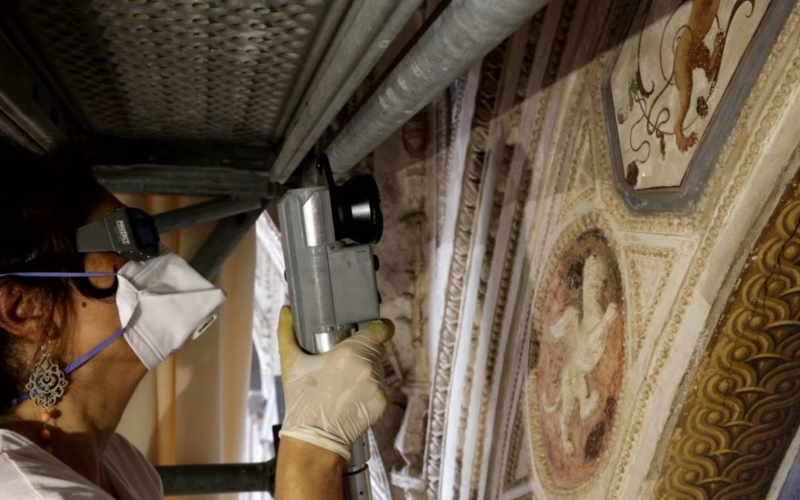
The Vatican Museums have commenced an extensive restoration project aimed at preserving the renowned frescoes of the Hall of Raphael in the Apostolic Palace, one of the Vatican’s most treasured artistic landmarks. The initiative, expected to last five years and cost approximately €5.5 million, represents the first comprehensive restoration of the historic artworks since their creation in the early 16th century.
The restoration work began on 15 April 2026 and is scheduled for completion in 2031. More than 20 conservators are involved in the project, employing advanced laser technology to carefully clean and preserve the fragile surfaces while maintaining the integrity of the original artwork.
The Hall of Raphael, also known as the Loggia of Raphael, stretches approximately 210 feet in length and features nearly 14,000 square feet of frescoes and decorative stucco work. The masterpieces were designed by the celebrated Renaissance artist Raphael and executed between 1517 and 1519 by his assistants, including Giulio Romano, Giovanni da Udine, and Perin del Vaga. The artwork depicts scenes from the Old Testament alongside intricate botanical motifs and ornamental designs.
According to the Vatican Museums, centuries of exposure to environmental conditions have left the frescoes in need of urgent conservation. Restoration experts spent several years conducting studies and testing different methods before selecting a specialised laser-cleaning technique capable of removing accumulated dirt without damaging the delicate original pigments.
Barbara Jatta, Director of the Vatican Museums, described the initiative as a significant milestone in both restoration science and Renaissance art preservation. She noted that the hall has long been admired by religious leaders, diplomats, and artists from around the world, making its conservation an important cultural undertaking.
In addition to restoring the frescoes, the project will include the installation of a modern lighting system and specially filtered windows designed to protect the artworks from ultraviolet radiation and excessive heat. Once the restoration is completed, plans are also being considered to provide greater public access to the space on selected occasions.
The restoration is being supported through funding from the World Monuments Fund, the Stephen A. Schwarzman Foundation, and the Patrons of the Arts in the Vatican Museums, reaffirming a shared commitment to preserving one of the finest examples of Renaissance artistic heritage for future generations.
